Culture by Design: Building Culture From the Ground Up
By Chase Fairchild • July 8, 2026
I got invited to speak to a room full of architects recently, which is funny because I'm not an architect. But it turns out we're doing the same job. Architects take things out of the ether, put them on paper, and watch them become reality. In marketing, we do the same thing, we just don't get a physical building at the end of it.
My talk was called Culture by Design, and it's the topic I get asked about more than almost anything else:
how do you build a thriving company culture in a work-from-home world?
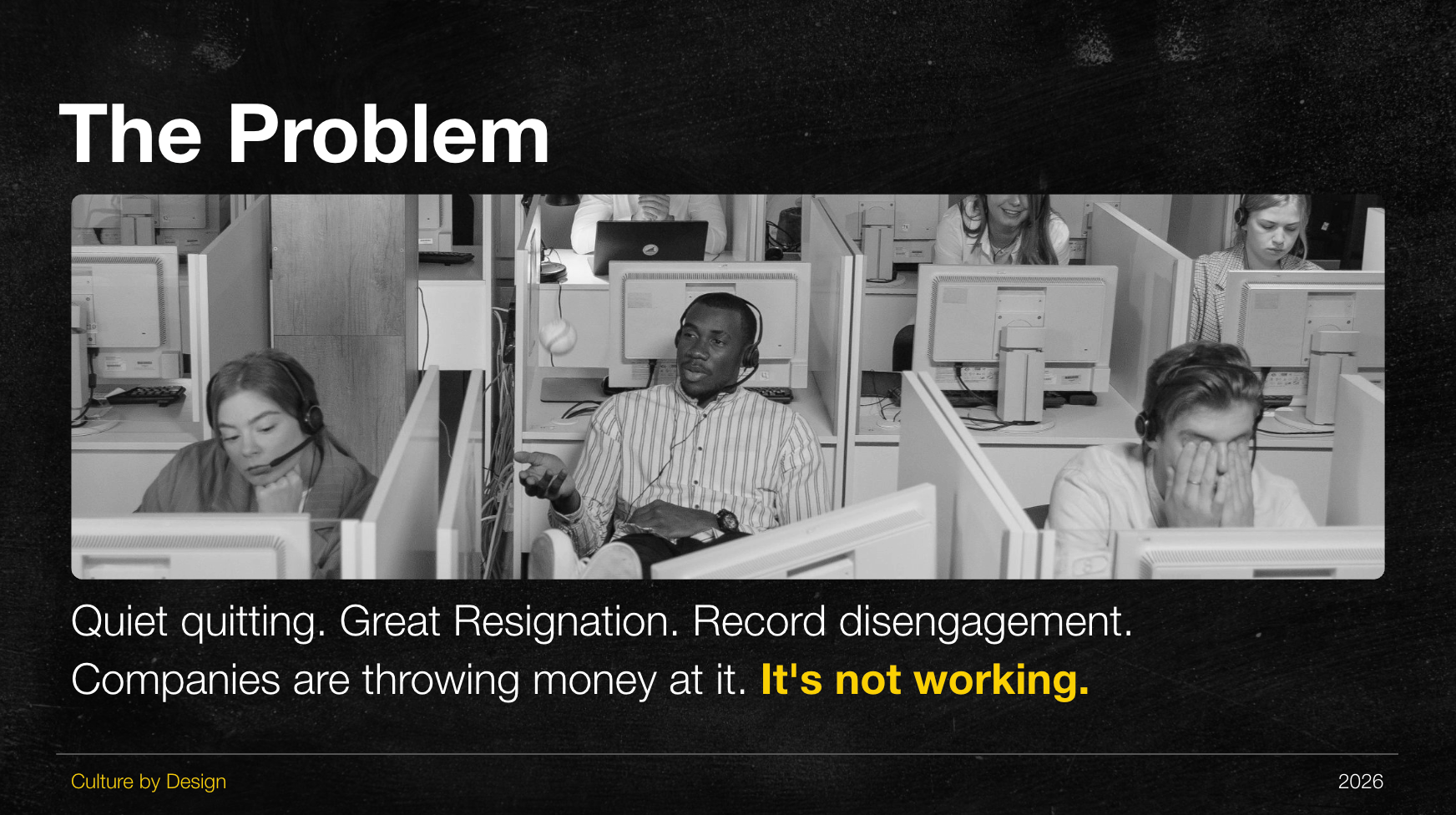
Here's the problem. The workforce is unmotivated. Quiet quitting is real. Some people are calling it the Great Resignation. Disengagement is at record highs, and companies, big and small, are at a loss for what to do about it. So they throw money at it. Big bonuses, relocation packages, title changes. That stuff might work for a minute, but long term, it still atrophies.
On the flip side, some companies just say screw it, we don't need people anyway, let's go remote, let's use AI, let's outsource everything. That might help profitability, but for humanity, it's not a win.
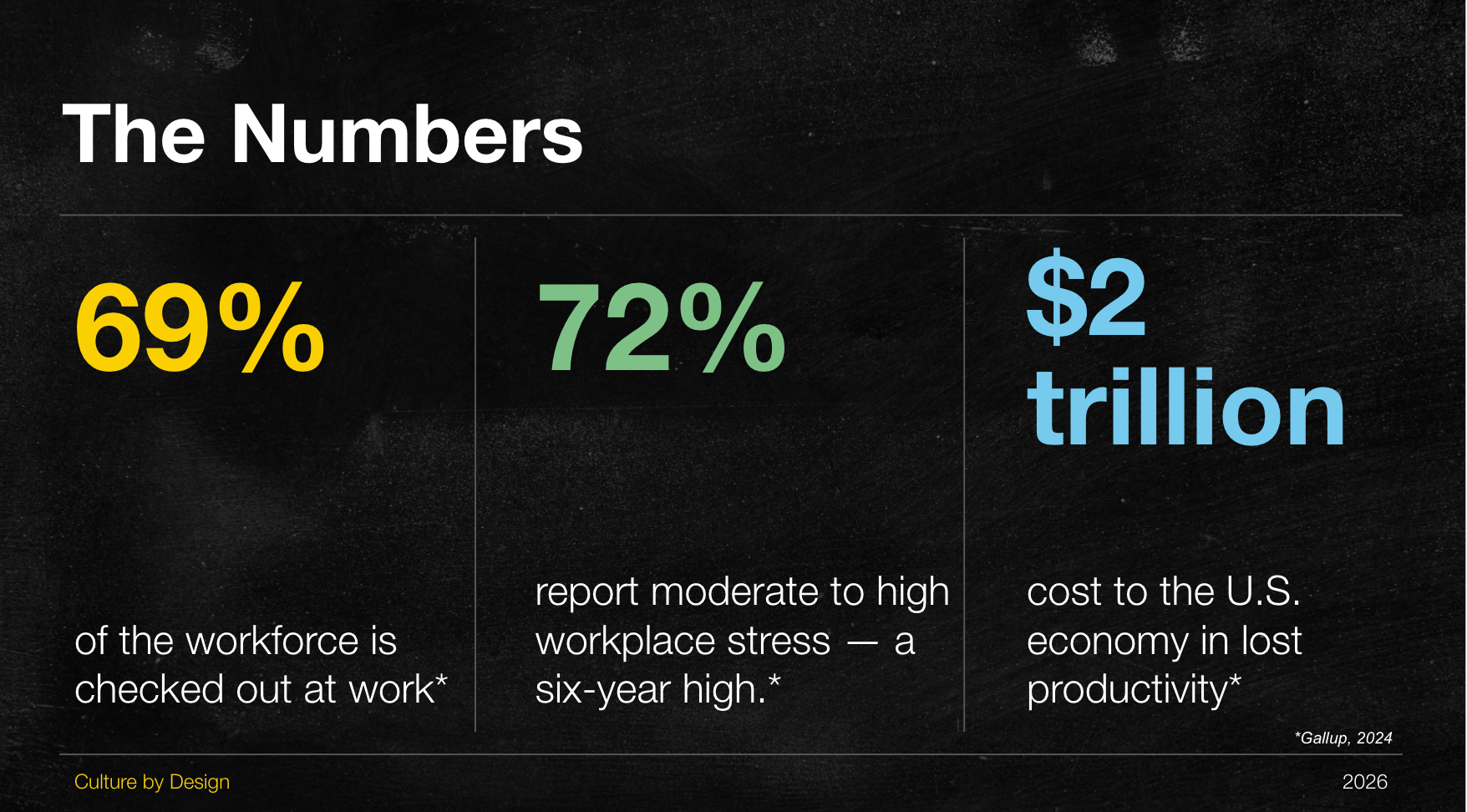
The numbers back this up, and they're bleak. As of 2024, 69% of the workforce reports being checked out at work. 72% report moderate to high workplace stress, a six-year high. That disengagement is estimated to cost the U.S. economy $2 trillion a year in lost productivity. So the numbers are bad. But the fix isn't money. It's not a ping pong table, it's not pizza parties, it's not casual Fridays. It's something much deeper. The fix is culture.
Your Culture IS Your Brand
In the world of marketing, everybody thinks branding means something different. For most people, brand means your visual identity, your logo, your colors, the fun stuff. And yes, that's part of it. But at its purest sense, your branding is your perspective, and nothing is a bigger indicator of your perspective than your culture. So your culture is your brand. You can have sleek design and win awards, but if your culture is weak, your brand is weak underneath it.
Every organization has a culture, whether you're paying attention to it or not. You have an organic culture that formed naturally as your company took shape. But as you scale and things get more complex, that culture erodes if you're not intentional about it.
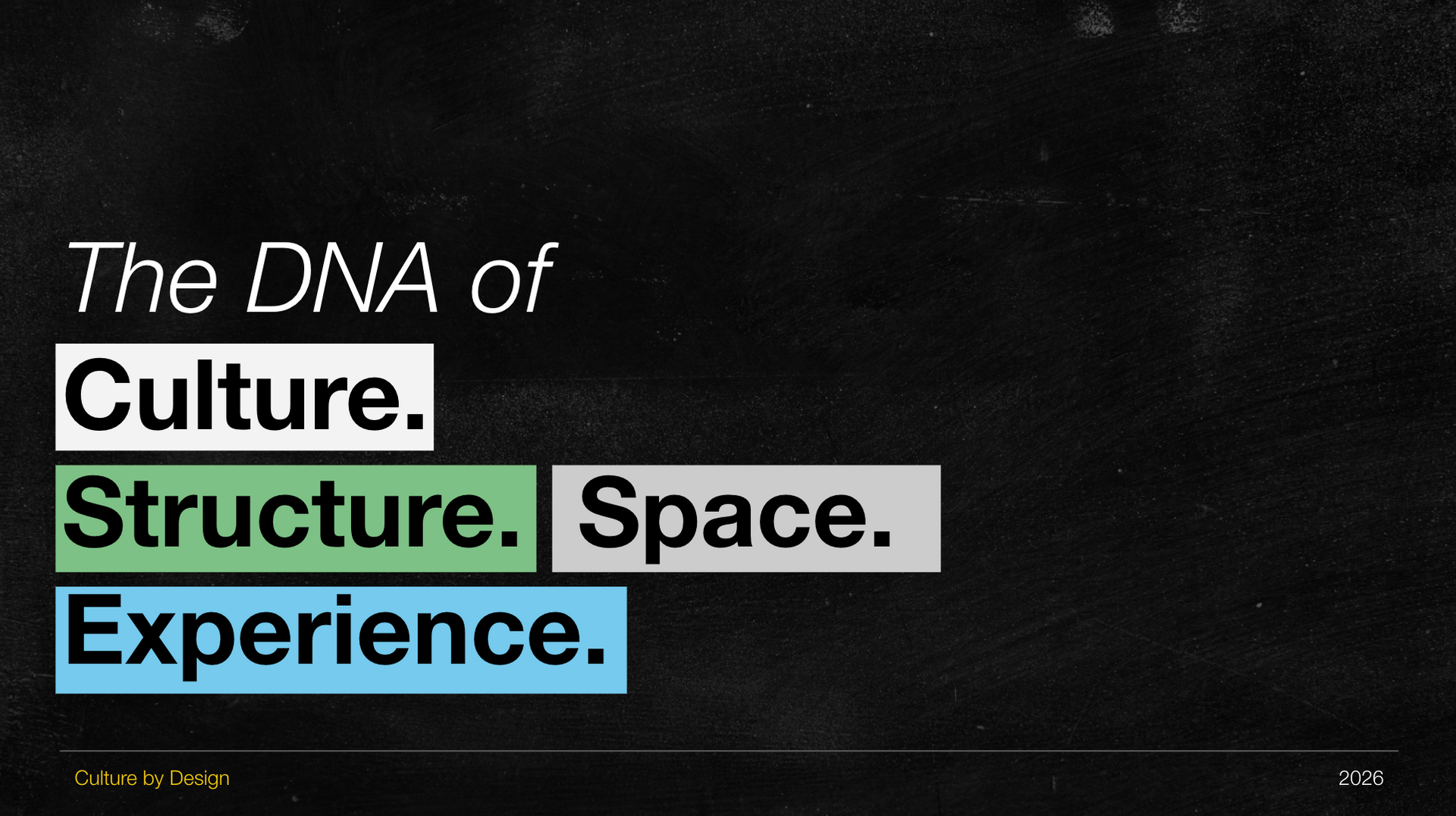
The good news is culture can be made. And it's made up of three pillars:
- Structure
- Space, and
- Experience.
I'm going to walk through all three using Bolt Marketing, the agency I started nearly 8 years ago, here in Lexington, as the case study, because it's the one I know best.
Pillar One: Structure
As a young creative, I resisted structure. I didn't want to be told what to do. I wanted to be a free spirit, which is basically why I ended up in entrepreneurship and was probably unemployable in any traditional job. But after getting burned a couple times, after building companies that never took off, I learned that structure actually brings freedom. It made my life easier. Think about basketball without out-of-bounds lines, fouls, or points. Nobody would watch it. The same is true for your business. Without structure around your culture, nothing happens and nobody cares.
Productize Your Services
Bolt started about eight years ago, after I came off a couple of failed ventures. People love to talk about the wins in entrepreneurship, but there are a lot more failures. The only real failure is when you stop. Before Bolt, I started an agency in 2017 with some talented friends, and it was a mess. We didn't know why we existed, what problem we solved, or who our audience was. We sold billable hours and retainers, which sounds fine until clients suddenly become experts on how long something should take. We fell into the classic trap, 80-hour weeks, late nights, everybody burned out. Bolt came out of the ashes of that.
I did not want to recreate that trap, so the first thing I did was productize our services. Think about buying a coffee. You ask for a latte, it's six bucks, done. Nobody expects a bagel to be included. Nobody negotiates the price down because they think it should've taken less time to make. But in professional services, people assume things are included all the time, and a lot of that is on us. When I was starting out, I was eager to please, eager for clients and portfolio pieces, so I said yes to everything and never set boundaries. Productizing our services fixed that. I could agree on exactly what I was offering, clients could agree on what they were buying, and as we've grown, my team knows exactly where the lines are.
If you're designing your own services, keep it simple, like fast food. You've got the entree only, the combo with a side and a drink, and the extra large with everything. Small, medium, large, extra large. Think about time to outcome, and don't give away your high-lift work in the smaller packages. Save it for the bigger tier. That structure is also why I can write a full proposal in fifteen minutes now instead of two weeks, because every question is already answered before the prospect even asks it.
Write Down Your Core Values, Then Actually Use Them
A lot of companies, especially big ones, pay to have core values or mission statements written, and then never do anything with them. Box checked, never looked at again. At Bolt, our core values are Built Integrity, Create Collaboratively, Always Be Growing, Be a Swiss Army Knife, and Have Fun. They're not just on the wall. They're a living part of how we assess success. When we hire, we ask if a candidate shows these values. When we give performance feedback, we can usually point to one or two values someone is falling short on. When we've had to let someone go, the diagnosis almost always traces back to a core value they repeatedly didn't meet. When you hire someone and they stack hands on these values, they understand it's a standard of expectation. That's a structural play that protects your culture over time.
Language Creates Belief
That might sound a little new-agey, but it's true. What we say and think about our work shapes how people respond to us, our teams, our leaders, our clients, all of it. So we're intentional about the words we use. I never let my team call us a vendor. We're growth partners. And when someone on the team gets frustrated with a client, which happens for a hundred reasons, I remind them that's job security. If the client knew what they were doing, they wouldn't have hired us. That reframe changes how the whole team shows up. I want everyone thinking about the outcome our work creates, not just the deliverable, what it means for the community, the people, the bigger picture. A healthy company equals a healthy community, and that's worth remembering when the work gets hard.
Pillar Two: Space
I'm a big believer in physical office space. Covid was hard on culture for exactly this reason. Three of our five core values are about collaborating together, and it was genuinely difficult to hold onto that in a digital Zoom world where we couldn't be in the same room.
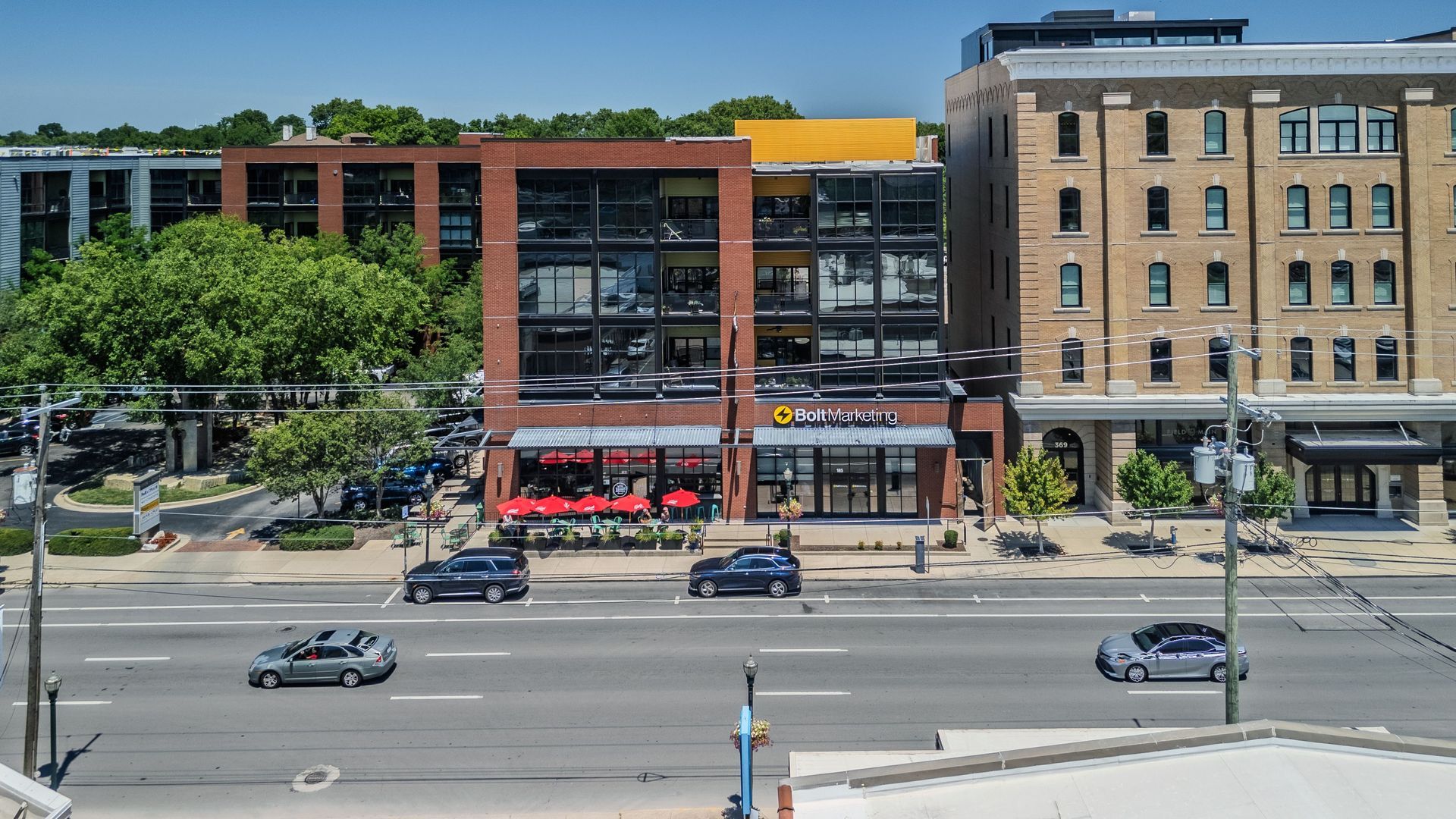
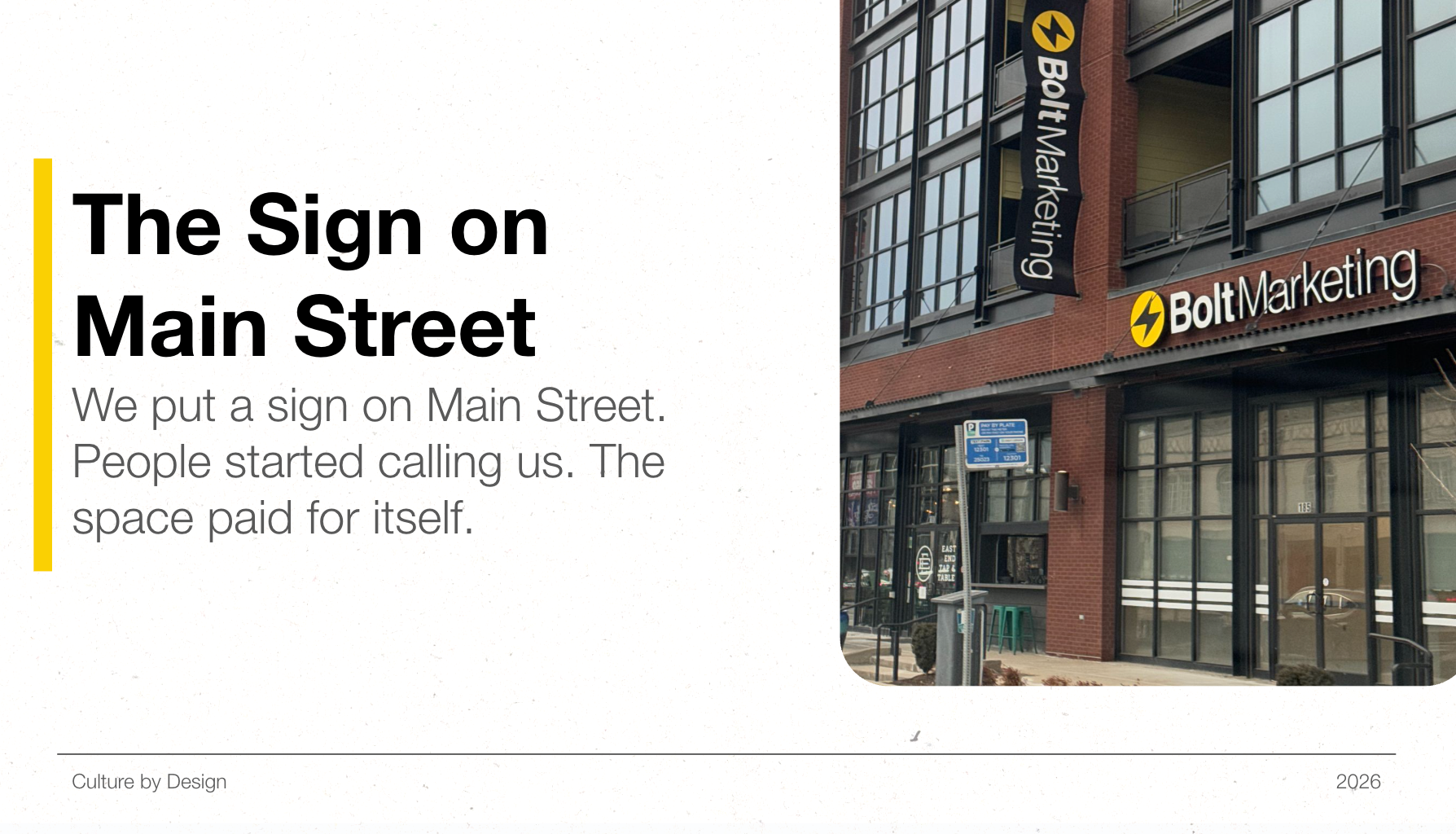
For the first six years of Bolt, we were in a pretty standard office park. Beige walls, hard for clients to find, fine but forgettable. Eventually we outgrew it, and I started imagining something different. I've always been inspired by brands like Apple and their retail stores, what Scott Galloway calls a temple to the brand. Walking into an Apple Store used to feel like you were part of something. I wanted that same energy for our office. I also loved the idea behind the Capital One Cafe, a space where a brand and its customers can actually engage with each other. That vision shaped our Main Street office in downtown Lexington.
Most marketing and professional services agencies sit on the top floor of a building, tucked away from the public. I wanted the opposite. I wanted to be on the first floor, doors open, people walking in off the street. We opened last April after a year of co-working that honestly started to wear on everybody. Construction always takes longer than you think, no matter how many times someone tells you that going in.
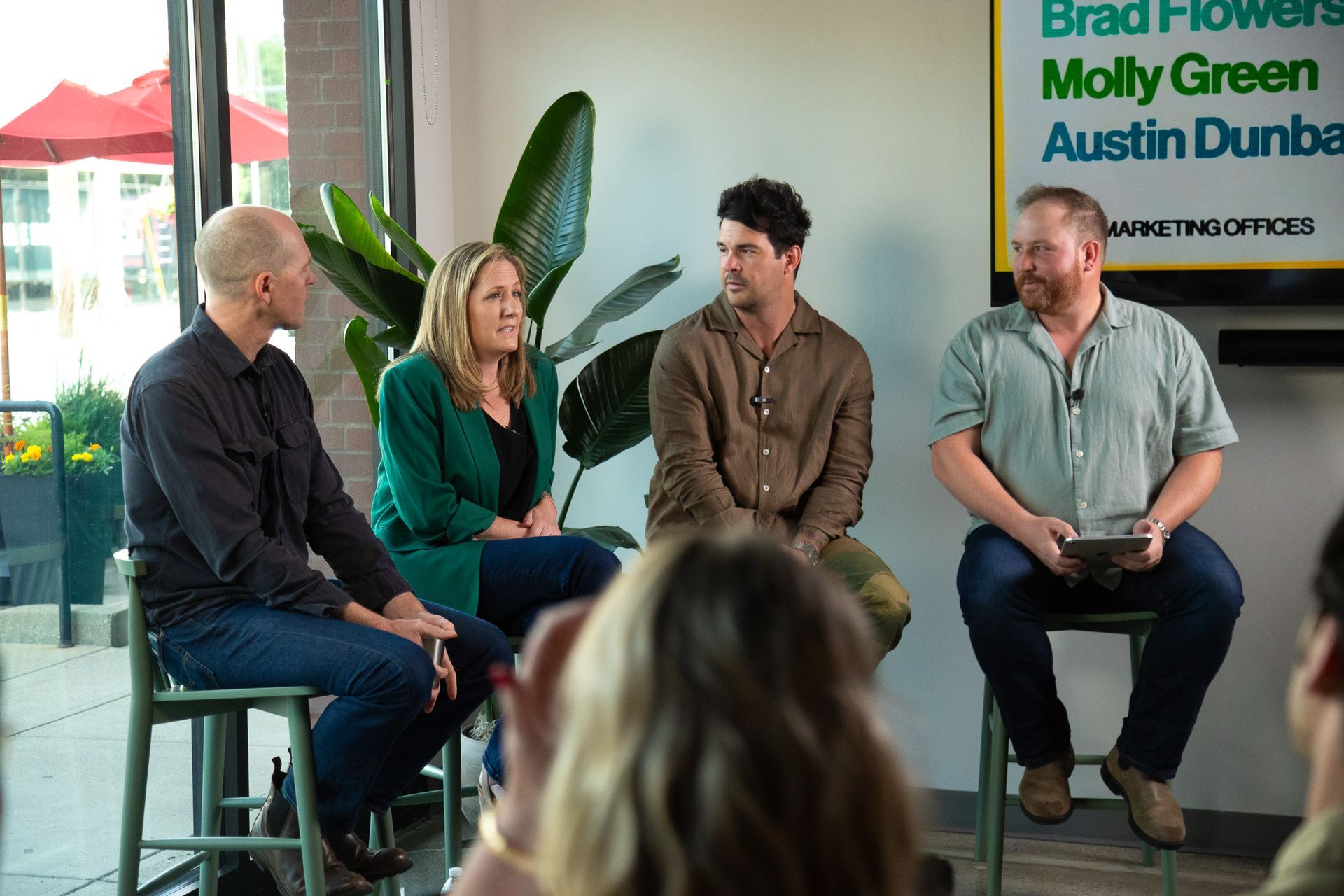
The impact on team morale has been noticeable, almost immediately. People claimed their desks, put up their own stuff, and within about a weekend the whole office felt thirty percent happier. That's not a scientific number, but it's what it felt like. Beyond our own team, the space has become a place to host panels, happy hours, and workshops, and we've opened it up for groups like UK and BCTC to bring student events through. I think the future of work is human-centric workspaces, and not in the tired Silicon Valley cliche way. Your space is a direct reflection of your culture. It's one of the best places to actually show people your brand instead of just telling them about it.
Pillar Three: Experience
Structure sets the rules. Space gives you a place to play the game. Experience is the shared moments that actually build the culture day to day.
Some of our best culture moments have come from unexpected places. Our team covers the Kentucky Three-Day Event every year for a client, running around in golf carts, getting muddy, working from 6 a.m. to 1 a.m. It's exhausting, sleep deprived, and full of natural friction. But everybody shows up because they like the people they're working with, they're aligned on the same values, and they share the same vision for what success looks like. That willingness only exists because of the culture underneath it.
My friend Ryan is another good example. I met him a few years ago, and I eventually realized he was a natural host, somebody who genuinely cares about hospitality. I knew I needed him on the team even before we had the space to fully use him. Now he's essentially the face of Bolt outside of me. He's first contact for new business, he runs our happy hours, he's the one who opens the door and makes people feel welcome. His willingness to lean into hospitality has made him one of our biggest assets.
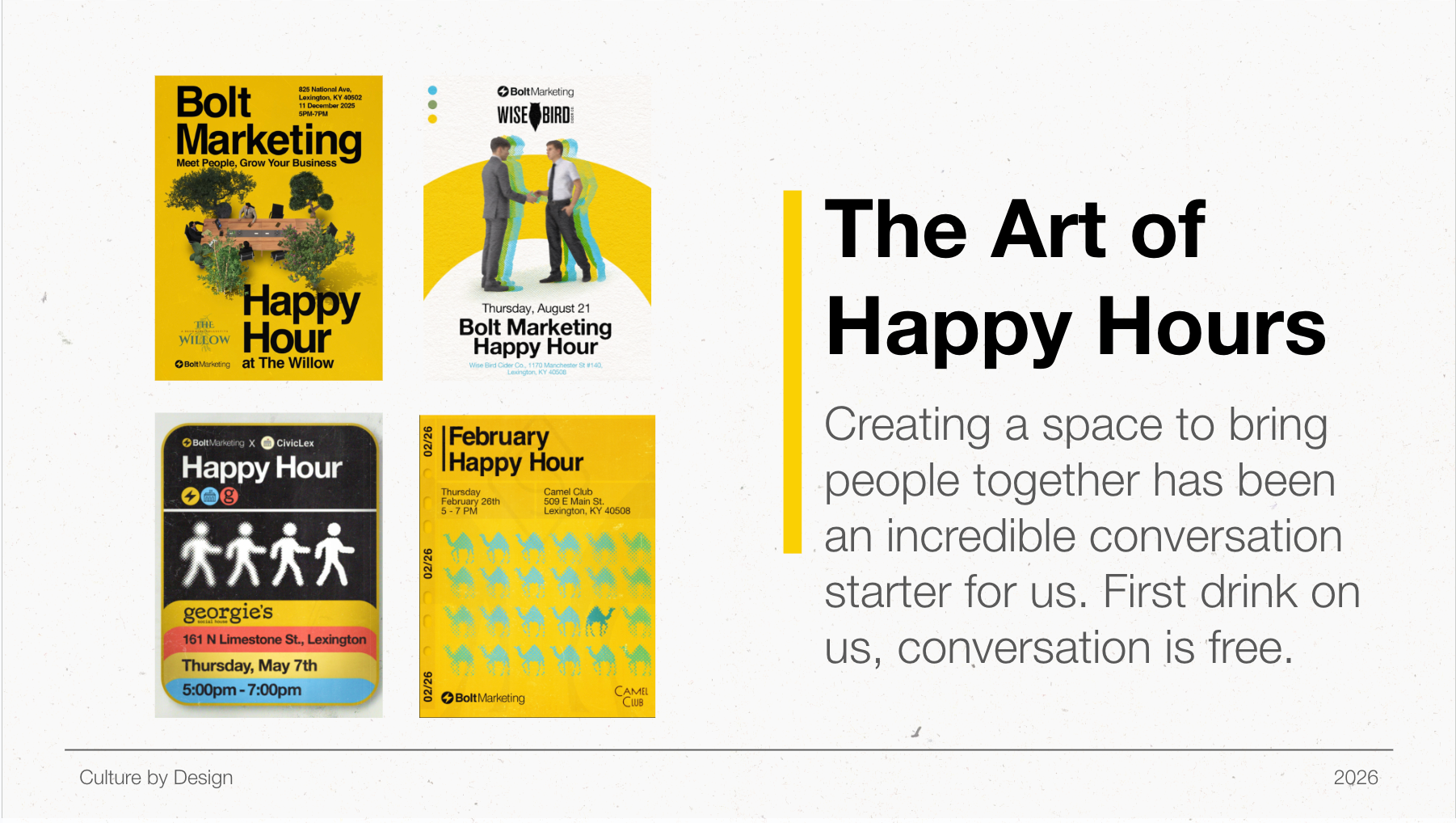
If your business is missing culture, start with shared experiences. I'm not talking about trust falls. For us, it started with happy hours during that co-working year when we didn't have our own space yet. We'd say first round's on us and invite people out. One of those turned into almost 100 people showing up, just people from the community coming together because we bought the first round and made it easy to say yes.
We've also done things that are a little out there. The Billy Bolt sandwich, named after our lightning bolt mascot, at Big Blue Deli downtown, where we sold almost 100 specials in a day, more than double the shop's previous record. We sponsored a local hockey team and did a full team takeover, jerseys and everything, complete with an after party for both teams and their families. They lost, unfortunately, but the day itself was a win. Most agencies keep their distance and protect a kind of professional mystique. We do the opposite on purpose. People want to work with interesting people, and the only way they know you're interesting is if you actually are.
Our First Company Retreat
Around year seven, we did our first company retreat, down in Nashville. It was expensive, and I was fully aware of that going in. I'd heard that only about 1 in 400 companies that start today make it to the ten-year mark, meaning roughly 98% will close. That statistic stuck with me, so I built the whole retreat around a vision I called Bolt Ten, casting where we wanted to be in three years.
We took the team away from production for two days, structured the time with work sessions, a group dinner, yoga, and a singer-songwriter who talked us through his creative process. What would have taken me six months to a year to build internally happened in two days. Everybody aligned on where we were headed, got excited about their part in it, and brought feedback on efficiencies we didn't even know we were missing.
The most impactful part wasn't the strategy session. It was a private dinner where we went around the table, and everybody shared how they felt about their coworkers. People got vulnerable. There were tears. It was the simplest thing we did all weekend, and everyone said afterward it was the best part. People don't know how you feel about them until you actually tell them, especially coworkers, because for whatever reason, that's the hardest group to say it to. We came back from that retreat and hit a groove. We doubled our revenue in Q1 compared to the year before, and I don't think that's a coincidence. When a team is aligned and communicating well, the work gets easier across the board.
Why This Actually Matters for Your Bottom Line
This isn't just a feel-good exercise. Organizations with strong culture see an 85% boost in revenue and an 18% increase in productivity. Employees in positive cultures are four times more likely to stay with the company. Companies with world-class culture deliver higher revenue and higher profit, full stop. It's not about cutting your way to profitability. It's about investing in culture, because if people believe in what you're doing, they'll work harder to build it. Hiring gets easier because you have real clarity on who fits. Sales and service delivery get better because the team behind them actually wants to be there. You're spending 40-plus hours a week with these people, getting their prime hours of the day. You'd better like them, because it's going to be tough otherwise.
Culture Is Contagious, and People Notice
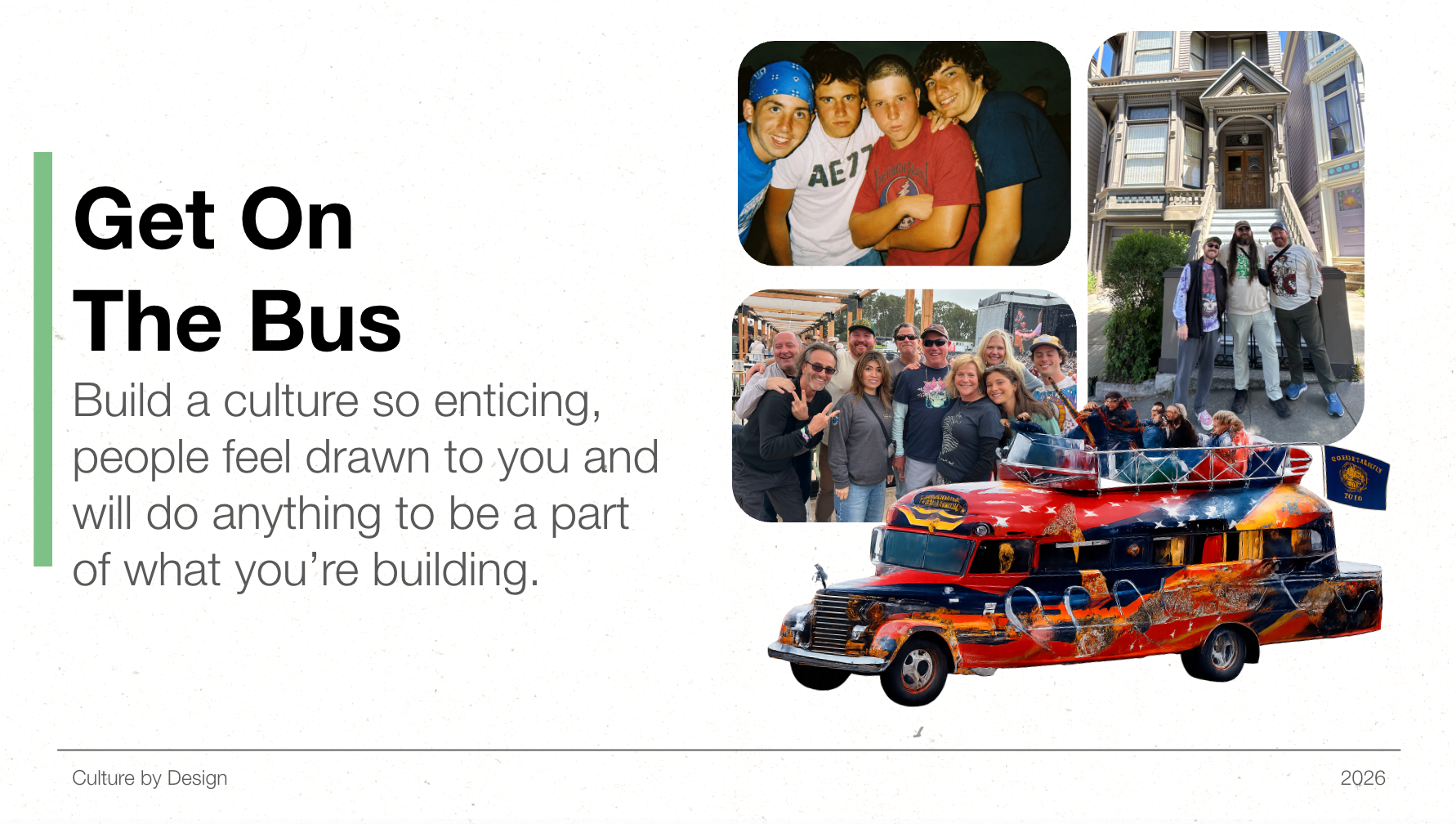
In the Grateful Dead world, there's a phrase, “get on the bus”, from their song The Other One. It describes the moment the culture pulls you in, and you become part of it. The same thing happens with companies. Build a culture that's genuinely infectious, and people notice it from a distance and want to be part of it. A couple weeks ago, I got a call from a guy in his late twenties who runs his own successful marketing firm. He told me he thought we were the best agency in town and wanted to close his own shop to come work for us. I don't know if we'll hire him, but it's proof that when you build something real, people take notice, even people who've built their own thing.
Scaling Culture as You Grow
We're now expanding into Nashville and Louisville, and the honest answer is that scaling culture across new markets is hard. It's not automatic. Our approach is to hire a local developer first, someone connected in the community who can bring people together, and the very first move in every new market is the same: a happy hour. Show up, meet people, build relationships before you build a sales pipeline. Once a market hits a certain revenue threshold, we add an account manager on the ground, so the people we're working with don't feel like they're dealing with some agency out of Lexington. They feel like they're working with people in their own community.
A mentor once told me you can only get bigger or better at any given moment, not both at once. Think of it like an inhale and exhale. There are seasons where you're purely growing, and seasons where you pull back and evaluate your systems and internal processes before pushing forward again. The businesses that get into real trouble are the ones with big, uncontrolled swings, a bad hire, a client that takes on more than the team can handle, systems that break under weight they were never built for. The good news is you can actually systemize culture. Our retreats are planned. Our happy hours happen quarterly on the same schedule. We know we're going, for example, to a Reds game on a party bus next week. When culture is baked into the calendar instead of left to chance, it survives the growth instead of getting lost in it.
The Bottom Line
The DNA of culture is structure, space, and experience. It doesn't matter if you're building a whole company culture, planning a single event, or just trying to bring more life into your corner of a larger organization. These three pillars apply at every scale. Set clear rules for what success looks like. Build a physical space that reflects who you are. Create shared moments that actually mean something. Do that consistently, and the numbers follow.
If you want to talk more about marketing, entrepreneurship, or building culture inside your own company, I'm on Instagram and LinkedIn talking about this stuff regularly. Come say hi.
Chase Fairchild is the CEO and founder of Bolt Marketing, a Lexington-based marketing agency, and co-founder of Manchester Coffee, Full Court Social, and Good Reception Records.
"If you're looking for a coach who gets both strategy and execution - and can help you move forward with confidence - Chase delivers."
- Wade H.
Latest Posts